
Open Letter on the Need for Transparency, Accountability and Expedited Completion of the Akwa Ibom State House of Assembly Complex
…Comrade Ini-obong Uko writes to Governor Umo Eno, calling for answers on the prolonged rehabilitation of the Assembly Complex
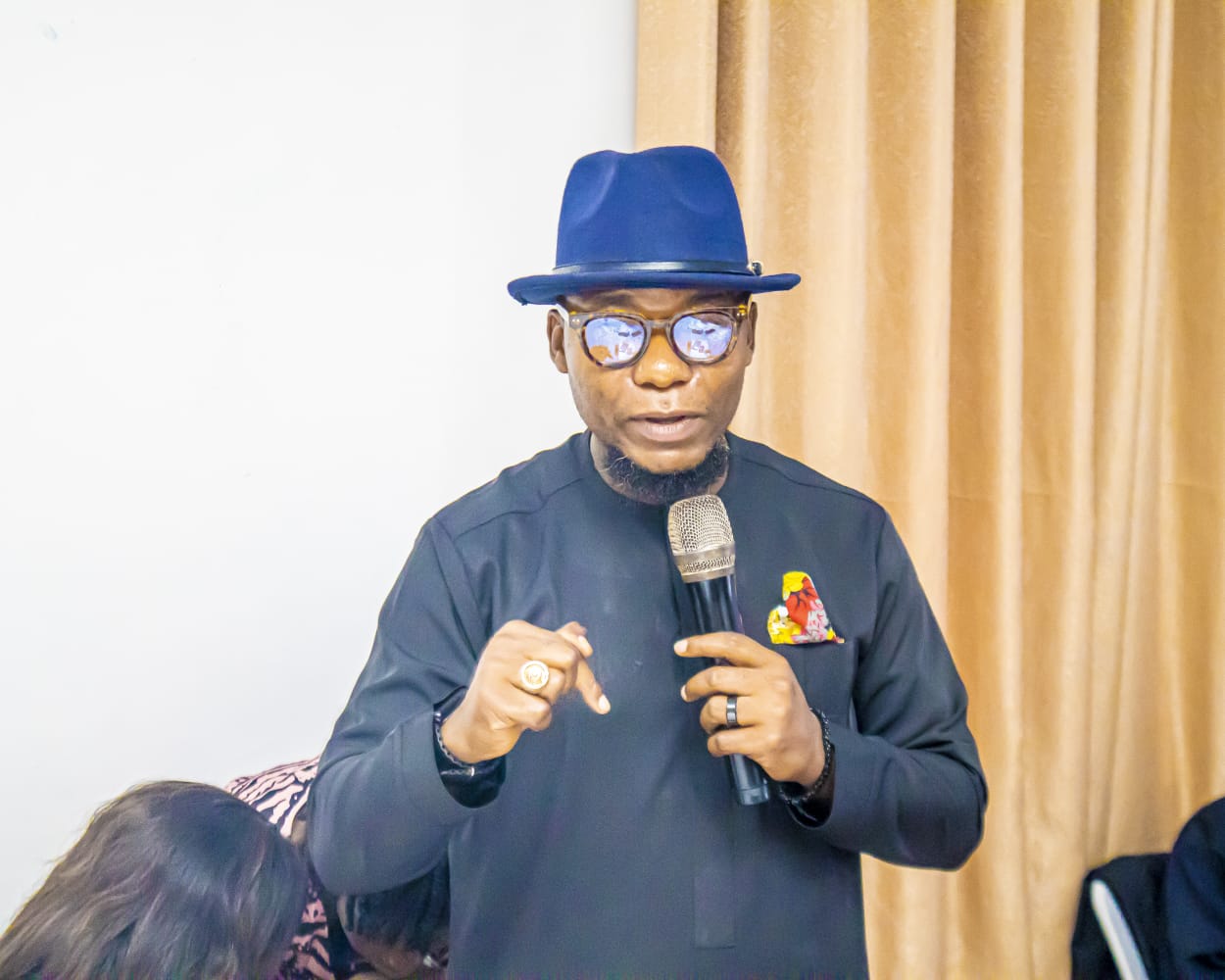
To: His Excellency, Pastor Umo Eno, Ph.D., Executive Governor, Akwa Ibom State, Government House, Uyo. Through: The Rt. Hon. Speaker, Akwa Ibom State House of Assembly, Uyo.
Your Excellency,
I write as a concerned citizen of Akwa Ibom State, a youth development advocate, and a stakeholder in the advancement of accountable governance, institutional integrity and responsible management of public resources.
My attention has been drawn to reports of the ongoing oversight visits by the Akwa Ibom State House of Assembly Committee on Local Government and Chieftaincy Affairs to the 31 Local Government Areas of the State, during which the committee has reportedly assessed the performance of local government chairmen, inspected projects and examined the utilisation of public funds.
While recognising the constitutional responsibilities of the legislature and the importance of effective oversight at the grassroots, I believe there is an equally important matter of public interest that deserves attention: the prolonged rehabilitation and remodelling of the Akwa Ibom State House of Assembly Complex.
The legislature is a foundational institution of democracy. Its permanent home is not merely an administrative facility; it represents constitutional authority, democratic representation, institutional continuity and the sovereignty of the people.
For this reason, the condition of the Assembly Complex, the circumstances surrounding its prolonged closure and the public expenditure associated with its rehabilitation deserve transparency and legitimate public scrutiny.
THE MATTER OF PUBLIC CONCERN
For several months, the Akwa Ibom State House of Assembly Complex has remained largely inaccessible for normal legislative operations following the commencement of its rehabilitation.
Substantial sections of the building's roof were removed, lawmakers and administrative personnel were displaced, and legislative activities were relocated to temporary facilities, including Luton Park, while the permanent complex remained incomplete.
The limited visible progress over an extended period has understandably generated questions among citizens regarding the management, supervision, funding, contractual arrangements and execution of the project.
Public reporting has also raised questions concerning the project's financial provisions, implementation timeline and apparent delays. Although subsequent reports indicate that construction activity has resumed, the resumption of work does not remove the public's legitimate right to understand what happened during the preceding months.
The issue is therefore not simply about the completion of a building. It concerns the proper management of public resources, the functioning and dignity of a key democratic institution, and the obligation of public authorities to provide citizens with clear answers about projects funded with public resources.
THE QUESTION OF INSTITUTIONAL ACCOUNTABILITY
Your Excellency, the House of Assembly plays an important role in ensuring accountability across government. Its oversight responsibilities require it to examine how public institutions operate, how public funds are utilised and whether government programmes deliver value to citizens.
However, accountability should be reciprocal.
When the legislature visits Local Government Areas to assess the performance of elected officials, inspect projects and demand explanations concerning public resources, citizens are equally entitled to expect transparency concerning the legislature's own infrastructure, expenditure and administrative decisions.
This should not be interpreted as an attempt to undermine the constitutional authority of the House of Assembly. Rather, it is a call for the institution to strengthen public confidence in its oversight responsibilities by demonstrating that accountability is a principle it also practises within its own affairs.
The credibility of public oversight is strengthened when those exercising it are themselves willing to submit their institutional activities to legitimate public scrutiny.
QUESTIONS REQUIRING OFFICIAL CLARIFICATION
In the interest of transparency and public confidence, I respectfully request that Your Excellency, through the Rt. Hon. Speaker and the appropriate authorities of the House, facilitate official clarification on the following:
1. Project approval and financial authorisation: What was the original approved budget for the rehabilitation and remodelling of the Assembly Complex, and have any additional provisions, variations or supplementary approvals been made?
2. Contractual arrangements: Which company or contractor was awarded the project? What is the contract sum, date of award, commencement date and original completion deadline?
3. Financial disbursements: How much has been released and paid to the contractor to date? What remains outstanding, and what proportion of the approved project cost corresponds to work completed?
4. Circumstances surrounding the delay: What factors accounted for the prolonged period of limited construction activity? Were there contractual disagreements, funding challenges, technical issues or administrative circumstances responsible?
5. Expenditure on temporary accommodation: How much has the State Government or House of Assembly spent on Luton Park and other temporary facilities for legislative sittings, offices and administrative operations during the relocation?
6. Project supervision and accountability: Which ministry, department, agency or designated authority is responsible for supervising and certifying the project? What monitoring mechanisms are in place to ensure compliance with contractual specifications and value for public money?
7. Current project status and completion timeline: Following the reported resumption of construction, what is the verified percentage of work completed, and what is the revised date for the full restoration and occupation of the permanent Assembly Complex?
8. Public disclosure: Will the relevant authorities make available the project contract details, approved budgetary provisions, payment records, implementation reports and revised completion schedule for public scrutiny?
These questions are not intended to obstruct government or undermine the legislature. They are legitimate questions arising from a publicly funded project involving one of the State's most important democratic institutions.
A CALL FOR TRANSPARENCY AND ACTION
Your Excellency, ensuring the completion of the Akwa Ibom State House of Assembly Complex goes beyond the physical reconstruction of a building. It concerns the preservation of institutional dignity, the efficient use of public funds and the operational capacity of the legislature.
I therefore respectfully call on Your Excellency and the relevant authorities to:
1. Provide a comprehensive and publicly accessible status report on the rehabilitation project.
2. Transparently document and communicate the contractual, financial and administrative circumstances surrounding the prolonged delay.
3. Publish a clear and realistic completion timeline supported by measurable implementation milestones.
4. Ensure that contractors and project supervisors are held accountable for their respective contractual and professional obligations.
5. Encourage the House of Assembly to institutionalise a culture of reciprocal accountability by subjecting its own administrative and infrastructural activities to appropriate scrutiny.
6. Ensure that all expenditure associated with temporary legislative accommodation is properly accounted for and that the State receives demonstrable value for every naira expended.
CONCLUSION
The people of Akwa Ibom State deserve a legislature that is not only constitutionally empowered to hold other institutions accountable but is also demonstrably committed to transparency in its own affairs.
The ongoing assessment of Local Government administrations presents an opportunity to reaffirm that accountability must apply across all levels and institutions of government. It should not be a standard imposed only on others.
The Assembly Complex must not become a permanent symbol of administrative delay, unanswered questions or avoidable expenditure. Its rehabilitation should be completed with urgency, transparency and strict adherence to the principles of accountability and value for public money.
I make this appeal in the spirit of constructive civic engagement and in the enduring interest of Akwa Ibom State.
Let accountability be a principle we practise, not merely a standard we impose on others.
I trust that Your Excellency will give this matter the attention it deserves and ensure that the people of Akwa Ibom receive satisfactory answers concerning a project of such institutional and public importance.
Please accept, Your Excellency, the assurances of my highest consideration. Happy Independence Day.
Yours faithfully,
Comrade Ini-Obong Uko
Candidate Uyo State Constituency,
Allied People’s Movement
For Concerned Citizens of Akwa Ibom State
CC: The Rt. Hon. Speaker, Akwa Ibom State House of Assembly; The Clerk, Akwa Ibom State House of Assembly; The Honourable Commissioner, Ministry of Works; The Auditor-General for Akwa Ibom State; The Public Accounts Committee; The Nigerian Union of Journalists, Akwa Ibom State Council; Civil Society Organisations and Concerned Citizens.